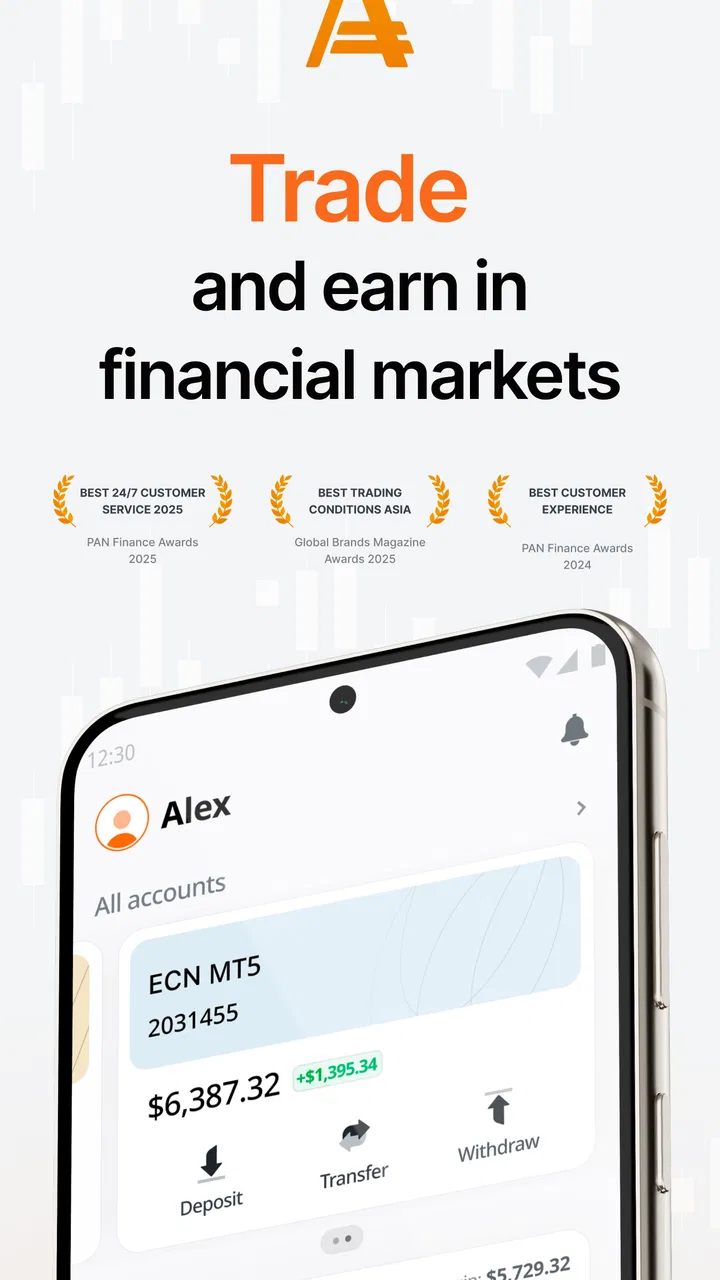
AMarkets: Finance & Trading
- 4.5
- Rating
- 1.00M
- Installs
- Free
- Price

 Analysis by App-foxy
I approached AMarkets: Finance & Trading as a mobile finance app rather than as a simple news reader. Its purpose is clear: bring investing, stocks, trading, and market news into one place for people who want to follow financial activity from a phone or tablet. In my experience, that combination makes the app most useful when I treat it as a decision-support tool, not as an automatic route to better decisions.
The app comes from AMarkets LLC, is free to download, and sits in the Business category. It is suitable for Everyone, which makes the interface approachable for a broad audience, although the subject matter itself still demands care. Financial information can look simple on a screen while carrying serious consequences, so I would not confuse an accessible app with a risk-free investing experience.
What I like most is the way the mobile format encourages short, repeated check-ins. I can look at market information during a spare moment, compare what has changed, and return to the wider picture later. That convenience is also the main trap: frequent checking can become distracting, and a fast-moving screen can tempt users to react before they have a plan.
You May Also Like

 Blood Strike: 2.5 Anniversary
Blood Strike’s Loadouts Turn Every Drop Into a Tactical Gamble
A close look at Blood Strike’s custom loadouts: how fast access to signature weapons reshapes its battle royale rhythm, rewards preparation, and narrows the gap between fights.

 Pandora - Music & Podcasts
Pandora’s Music Is Easy to Start, but Harder to Recover
Pandora’s strength is its low-effort path from a seed to a station. Its weak spot is how much confidence it asks you to place in connection, setup, and quiet recovery.

 8 Ball Pool
 Is Built on Rivalries, Rematches, and Routine
A close look at the rivalries, rematches, shared routines, and unanswered safety questions that turn a quick pool match into a persistent mobile community.

 Samsung Music
’s Quiet Strength Is Playing What You Already Own
Its reach comes less from spectacle than from dependable access to a personal library. That simplicity is both the app’s strongest retention engine and its ceiling.

 AccuWeather: Weather Radar
AccuWeather Review: A Quick, Clear Forecast for Everyday Decisions
For everyday plans, the best forecast is the one you can understand quickly. AccuWeather makes rain timing, radar, and local conditions easy to act on, with a few trade-offs.

 Hill Climb Racing
Why Hill Climb Racing Still Turns Crashes Into One More Run
A tiny car, a bumpy hill and one more upgrade: Hill Climb Racing keeps resurfacing because its simple chaos makes every near-miss feel personal.
More From Our News Desk



How AMarkets feels when the network matters
I find the network matters most when a quick glance could turn into a decision. A steady connection makes it easier to read a market update in context; a weak one is a cue to pause rather than infer that a stalled screen reflects the market. That difference shapes how I fit AMarkets into the places and moments where I actually use my phone.
Live-looking information needs a dependable connection
A trading and finance app is naturally tied to connectivity. News, market information, account-related screens, and any action that depends on a current server response are more useful when the phone has a stable internet connection. I found that the quality of the experience is therefore shaped not only by the app itself, but also by where and how I use it.
At home on a reliable Wi-Fi connection, the app feels more suitable for deliberate research. I can take time to read, switch between areas, and avoid making a decision simply because a page is slow to load. On a busy mobile connection, the experience becomes more about quick awareness: checking what is happening, then waiting until conditions are clearer before doing anything important.
This distinction matters for anyone who expects a finance app to behave like a calculator or a notes app. A calculator remains useful without needing fresh information. AMarkets belongs to a different class. Its value depends heavily on current content and responsive communication with online services, so I would avoid treating an interrupted screen as confirmation that nothing has changed.
News is useful, but it should not become a shortcut for analysis
The inclusion of stock news gives the app a practical role beyond watching prices. I can use headlines as prompts for further investigation: something changed, a sector is attracting attention, or a company deserves a closer look. That is a better workflow than opening the app only to chase the most dramatic movement on the screen.
My advice is to separate three steps. First, use the app to notice an event. Next, check whether the information is relevant to the asset or market you are considering. Finally, decide whether it fits your own time frame and risk tolerance. This sounds basic, but mobile news encourages instant reactions. A headline can explain why a market moved without telling me whether entering now is sensible.
For that reason, AMarkets works better as part of a broader routine than as a complete research environment. I would still use longer-form analysis, official company information, and personal records when a decision involves meaningful money. The app is convenient for bringing market awareness together, but convenience should not replace verification.
A realistic phone-based routine
Imagine checking the app while commuting. I might open it to see whether overnight developments deserve attention, scan the relevant news, and make a note to review the situation later. That is a sensible use of a connected finance app. The less sensible version would be making a rushed trade while standing in a crowded station, with a weak signal and no opportunity to confirm the details.
I would also avoid placing a high-stakes action at the end of a short connection window. If the phone is moving between networks or the signal is unstable, I prefer to wait until the app responds normally and the surrounding information is easy to review. The small delay is preferable to guessing whether a request was received or whether a displayed figure is current.
Using the app in real mobile contexts
I use a finance app differently at a desk than in a queue or on the move: the setting changes how much attention I can give a headline and whether I can check the surrounding context. Thinking through those mobile situations helps me choose when a brief check is enough and when I should wait for a calmer moment before taking anything further.
At home, it supports a calmer workflow
The strongest setting for AMarkets is a quiet place where I can concentrate. On a larger screen, or simply with enough time on a phone, I can compare information instead of jumping between unrelated alerts. The app’s focus on finance, investing, stocks, trading, and news gives me a useful starting point for organizing a personal market routine.
I would begin by deciding what I want from the session. If I am only catching up on news, I do not need to turn that visit into a trading decision. If I am reviewing an existing position, I can use the current information to identify questions rather than immediately changing course. This small separation makes the app feel less emotionally demanding.
Another useful habit is to record the reason for a decision outside the app. A short note such as “reviewed because of company news” or “waiting for confirmation” helps me judge later whether I acted according to a plan. AMarkets can provide the mobile information layer, but a separate decision journal gives the experience more discipline.
On mobile data, restraint is part of the strategy
When I am away from Wi-Fi, I become more selective. I open the app for a specific purpose instead of leaving it active while repeatedly refreshing. That approach is better for both attention and data consumption. It also reduces the chance that I interpret every small update as a signal demanding action.
I would not use a weak mobile connection for careful comparison or an important account action. A page that takes too long to respond creates uncertainty, particularly when the user is unsure whether the latest information has loaded. In that situation, the right response is not to tap repeatedly. I close the loop, move to a stronger connection, and check again.
This is one of the less obvious trade-offs of mobile finance software: a phone makes access easier, but it also makes impulsive access easier. The best users are not necessarily those who check most often. They are the ones who know when a quick glance is enough and when the situation requires a proper review.
Travel and changing networks require extra patience
Travel is where the app’s dependence on connectivity becomes most noticeable. A user may move between Wi-Fi and mobile data, pass through areas with inconsistent coverage, or use a connection that is technically available but too slow for comfortable browsing. In those moments, I treat the app as a source of information that may need confirmation, not as a reason to hurry.
Before leaving a dependable connection, I would review the information I already need and make sure I understand my own plan. I would not assume that a screen viewed earlier remains current after a long gap. When I return to the app, I look for a normal refresh and recheck the context before acting.
That habit is especially important for people who travel frequently or work in places with unreliable reception. AMarkets can still be useful for monitoring when a connection is available, but it is not the kind of tool I would build an entire urgent strategy around if I knew connectivity would be uncertain.
What happens when something fails
When an app stops responding, I focus first on preserving a clear picture of what I was trying to do. I avoid rapid retries, regain a reliable connection, and check the relevant screen again before treating an action as complete. That measured recovery is particularly useful in finance, where uncertainty can otherwise encourage a rushed follow-up.
Slow loading should change the decision, not just the tapping
When a finance app feels slow, my first instinct used to be tapping the same control again. I no longer do that. Repeated taps can make it harder to understand what has actually happened, especially when the connection recovers suddenly. I wait, check whether the screen has updated, and then decide whether I need to try again.
This is a simple but important recovery workflow: pause, inspect, reconnect if necessary, and verify the result. I apply it to news screens as well as any action involving current account or market information. The goal is not merely to get the app working; it is to avoid acting on an incomplete picture.
If a screen does not respond, I move to a stronger connection before drawing conclusions. I also avoid assuming that a missing update means the market is quiet. The problem may be communication between the app and its online service rather than a lack of movement.
Recovery is easier when the user keeps a clear record
A short external note can be surprisingly valuable. If I was reviewing a particular asset or following a news event, I write down what I intended to check. After reconnecting, I can return to that purpose instead of trying to reconstruct it from memory. This prevents a failed session from turning into an emotional reaction.
For users who are new to trading, this is more important than it sounds. A connection problem can create pressure to “do something” simply because the app did not behave as expected. A written plan gives me permission to wait. In finance, waiting for clarity is often more sensible than forcing a decision during a technical interruption.
I also recommend checking the app’s current version through the normal store update process and keeping the device software compatible. AMarkets runs on Android seven point zero or later, and the current version is 2.1.137. Those details matter when troubleshooting because an outdated app or unsupported system can add another layer of uncertainty to a network problem.
Do not treat connectivity as proof of execution
One of the most important practical lessons is that seeing a button respond is not the same as understanding the final outcome of an action. If the network drops at the wrong moment, I want a clear confirmation before assuming anything. If the result is unclear, I reconnect and inspect the relevant screen rather than immediately repeating the action.
This is not a criticism unique to AMarkets; it is a general rule for connected financial tools. Still, the app’s mobile setting makes the rule easy to forget. A phone can make a serious action feel as casual as sending a message. I keep the two experiences mentally separate.
Using AMarkets without wasting data or attention
I get more value from AMarkets by opening it with a specific question instead of keeping market information in front of me all day. Short, intentional visits can protect attention as much as mobile data, while leaving time for independent research when a headline deserves more thought. The next step is deciding which checks genuinely serve my routine.
Choose purposeful sessions
My preferred approach is to group checks into purposeful sessions. I might review news in the morning, look again after a meaningful event, and avoid opening the app every few minutes without a question in mind. This reduces unnecessary network use and protects my attention from constant market noise.
Before opening the app, I ask myself what I want to learn. Is there a specific stock or market I am following? Am I checking a news development? Am I reviewing an existing decision? If I cannot answer, I probably do not need another refresh. This is a practical way to use the app’s connected nature without allowing it to dictate my day.
People with limited mobile data should be particularly deliberate. I would use Wi-Fi for longer browsing where possible and reserve mobile sessions for focused checks. I would also avoid leaving finance content open in the background when I am not actively reading it, because passive availability can encourage needless checking even when the information has not changed in a meaningful way.
Separate monitoring from action
A useful workflow is to use AMarkets for monitoring first and action second. During a quick mobile visit, I gather context and identify whether something deserves a closer look. I then make the actual decision only after reviewing the situation with enough time and a dependable connection.
This separation is one of the best ways to handle the app’s strengths and weaknesses at once. The strength is immediate access to a finance-focused environment. The weakness is that immediacy can blur the line between information and execution. By creating a pause between those stages, I keep the app useful without letting it become a source of automatic reactions.
I would also avoid treating a high rating as evidence that the app suits every investing style. AMarkets has an average rating of 4.5 from around 31 thousand ratings, and it has passed one million installs. Those figures suggest broad interest and a generally positive reception, but they do not tell me whether the app matches my preferred markets, research depth, or level of experience.
Who benefits most from this setup?
I see the best fit in users who want a mobile home for market awareness and trading-related information. Someone who follows stocks, reads financial news, and prefers checking from a phone may appreciate the focused environment. It can also suit a beginner who wants to become familiar with market language and routines, provided that beginner understands the difference between learning and risking money.
It is less suitable for someone looking for a fully offline reference tool, a simple budgeting app, or a long-form investment education course. It is also not my first choice for a person who becomes anxious from frequent price changes or who tends to act on every headline. In that case, a slower research process or a conventional portfolio-tracking method may encourage better decisions.
Compared with a general news app, AMarkets is more directly centered on finance and trading. Compared with a basic stock watchlist, it offers a broader context through its finance and news focus. The trade-off is that a specialized trading environment may feel more intense than a simple tracker. Users who prefer a quiet, minimal dashboard may find a general portfolio tool easier to live with, while users who want finance content in one dedicated place may prefer this approach.
My connectivity verdict
After using AMarkets as a mobile finance companion, I think its real value appears when I use it with a stable connection, a clear purpose, and enough patience to verify what I am seeing. The app makes market awareness convenient, but the phone should remain a doorway to information rather than a trigger for rushed decisions.
The network-dependent nature of the experience is not a minor detail. It affects how I browse news, how I interpret delayed screens, and when I feel comfortable taking any further step. On Wi-Fi or a strong mobile connection, the app can fit neatly into a regular monitoring routine. In weak coverage, it becomes a reminder to pause and confirm rather than proceed on assumptions.
AMarkets LLC has built a free Business app with a clear finance and trading identity, and its Everyone age rating makes it easy to approach. The current release, 2.1.137, supports devices running Android seven point zero or later. I would recommend it to readers who want focused mobile access to investing, stocks, trading, and stock news, especially if they are willing to combine it with independent research and a written plan.
My bottom line is simple: use AMarkets for informed monitoring, not impulsive certainty. Keep important sessions on a dependable connection, avoid repeated taps when a screen stalls, confirm outcomes after interruptions, and limit checks to moments that serve a real purpose. If that sounds like your style, the app is a practical addition to a mobile finance routine. If you need offline-first access, a calmer portfolio view, or a complete replacement for serious research, another type of tool may suit you better.
FAQs for AMarkets: Finance & Trading
01What features does AMarkets offer for trading?
AMarkets provides a range of features tailored for both beginner and experienced traders. These include access to various financial markets such as Forex, commodities, and indices. The app also offers real-time quotes, advanced charting tools, and a user-friendly interface. Additionally, users can benefit from educational resources and expert analysis for informed trading decisions.
02Is AMarkets suitable for beginner traders?
Yes, AMarkets is designed to accommodate traders of all levels. For beginners, the app offers educational materials, tutorials, and demo accounts to practice trading without financial risk. The intuitive interface and customer support are also valuable for newcomers who need guidance as they start their trading journey.
03What security measures does AMarkets implement?
AMarkets prioritizes user security with advanced encryption technologies and secure authentication processes. The app is regulated by reputable financial authorities, ensuring compliance with industry standards. Users can trade with confidence knowing their personal and financial information is protected against unauthorized access.
04How can I deposit and withdraw funds on AMarkets?
AMarkets provides multiple options for depositing and withdrawing funds, including bank transfers, credit cards, and popular e-wallets. The process is straightforward and designed to be user-friendly. However, users should be aware of any potential fees and processing times, which can vary depending on the chosen method.
05Are there any additional costs or fees associated with using AMarkets?
While AMarkets offers competitive spreads and commissions, it's important for users to review the fee structure before trading. Some costs may include overnight swap fees for holding positions and potential charges for withdrawals. Familiarizing yourself with the fee details can help in managing expenses and maximizing trading profits.
Pros
- User-friendly interface for quick navigation.
- Comprehensive market analysis tools included.
- Supports multiple trading instruments.
- Real-time data updates enhance decision-making.
- Secure platform with advanced encryption.
Cons
- Limited free features for basic users.
- Requires stable internet for optimal use.
- No offline mode available for analysis.
- Customization options can be overwhelming.
- Occasional lag during high traffic periods.

AMarkets: Finance & Trading
Gallery